Our Story — From Sarough (Farahan) to Europe and the USA
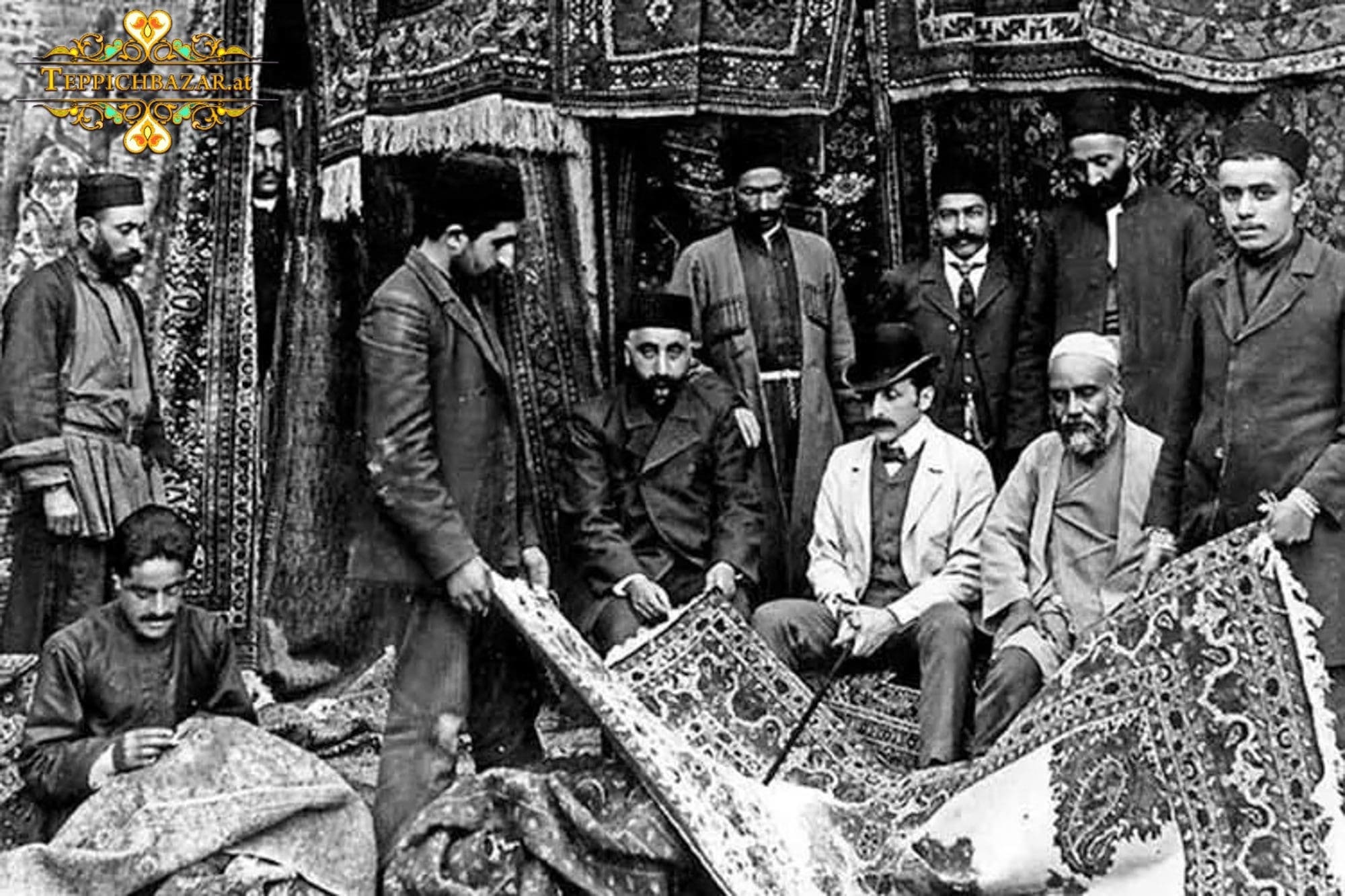 German employee of the Ziegler firm, Franz Theodor Strauss, in Persia
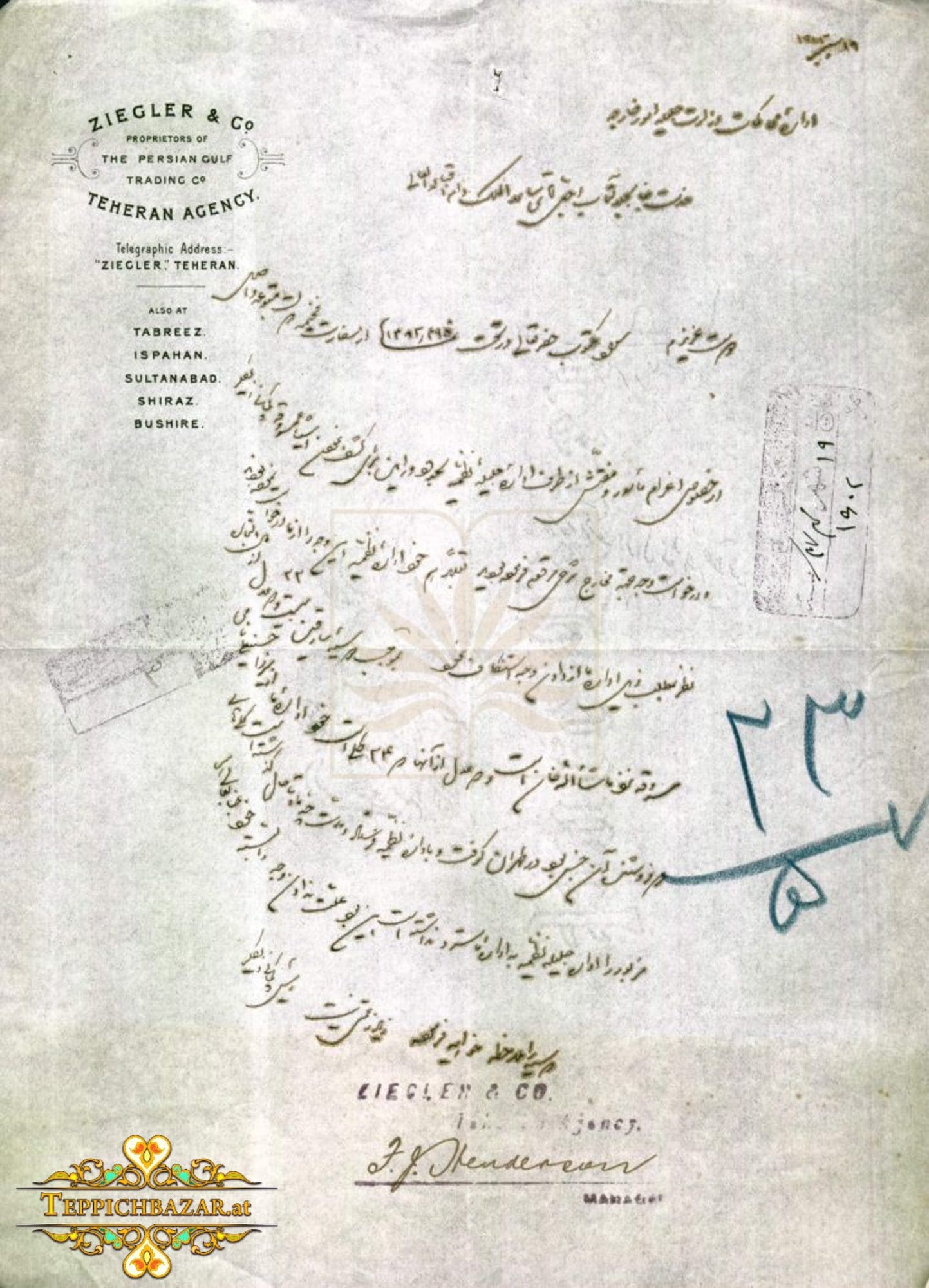 Ziegler & Co. reference from Sultanabad (Markazi, Arak, Farahan, Sarough)
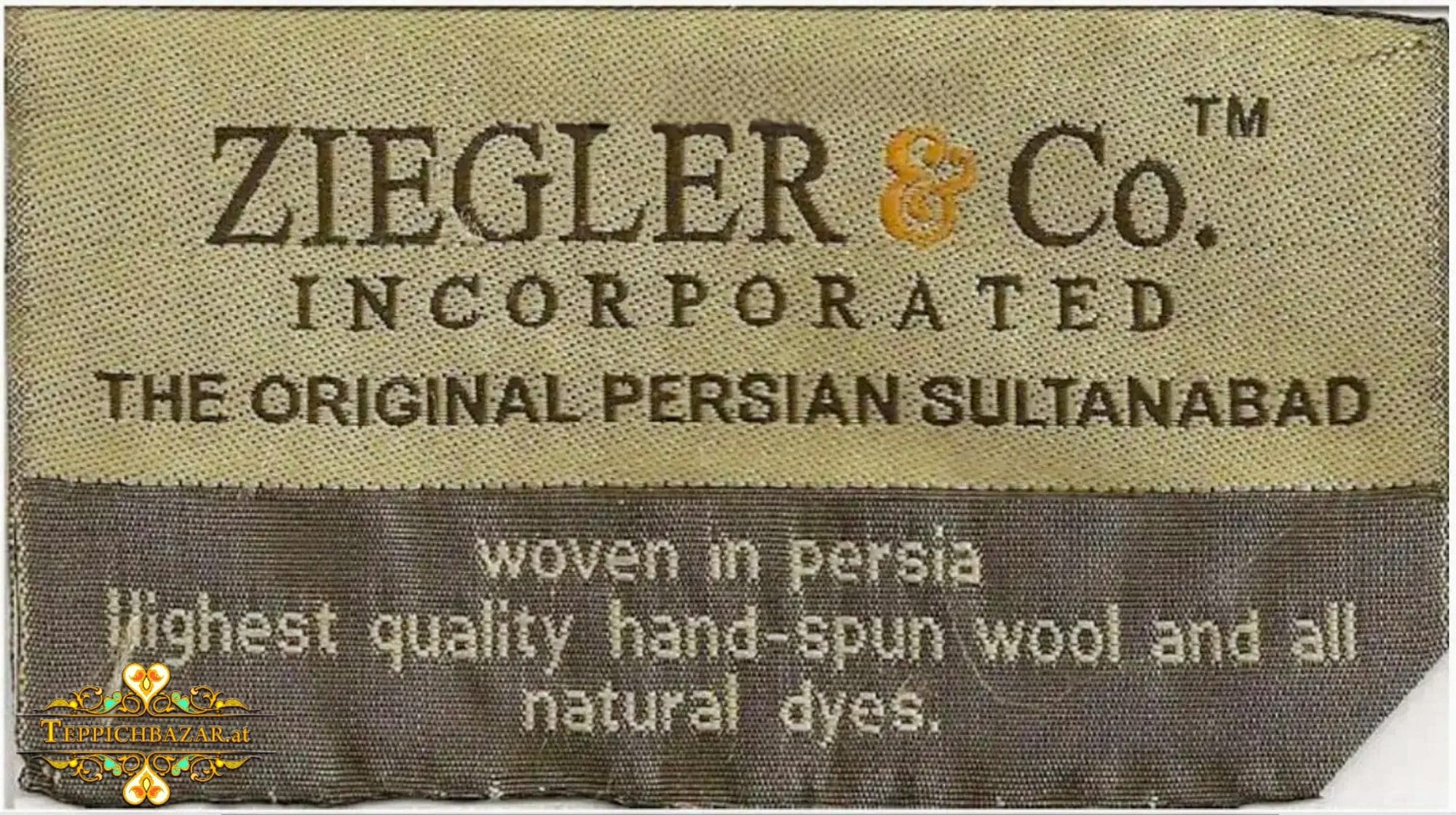 Ziegler & Co. company sticker for the province of Central Persia (Markazi), capital Sultanabad (Arak)
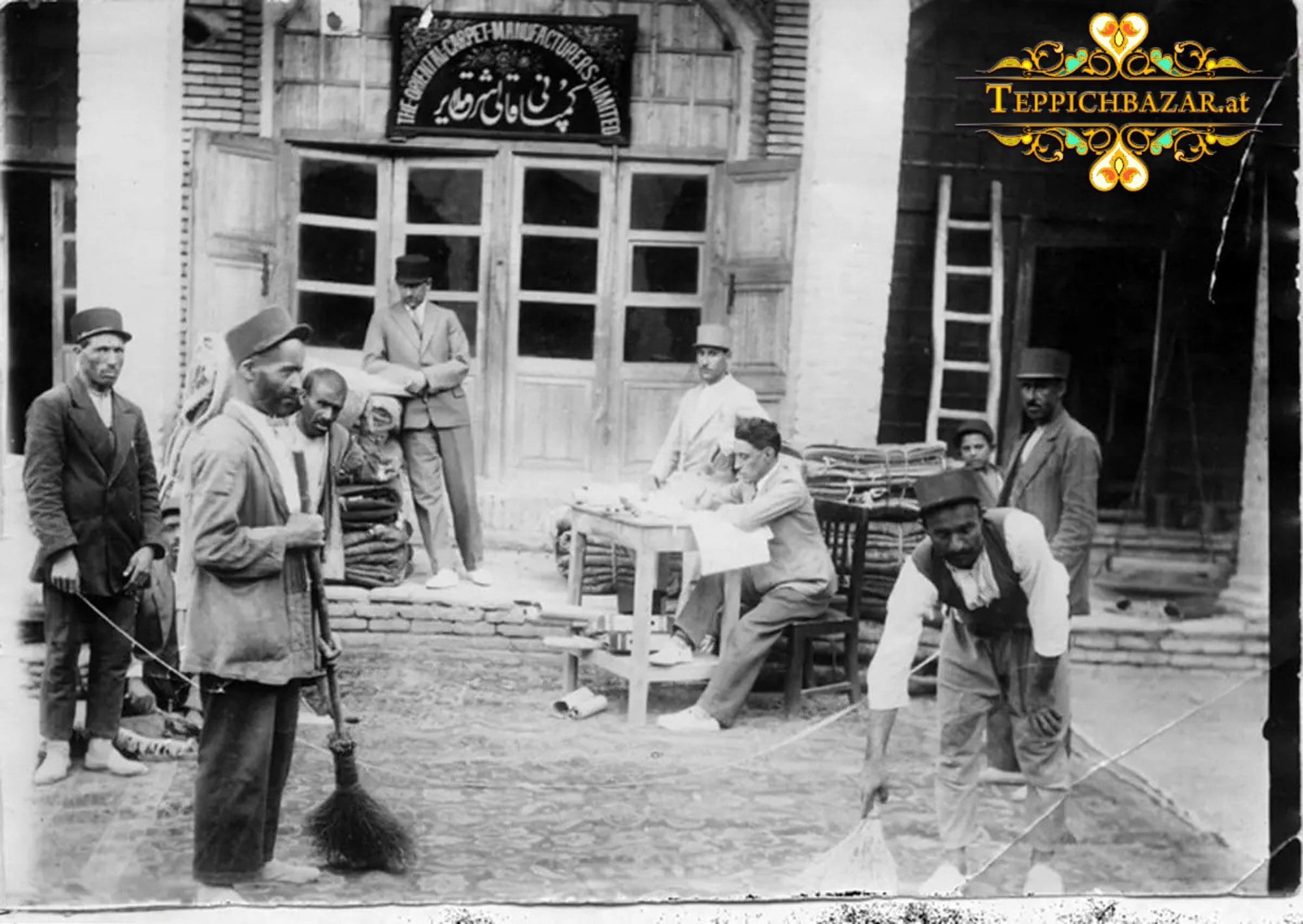 Malayer, Hamadan Province, Ziegler & Co.
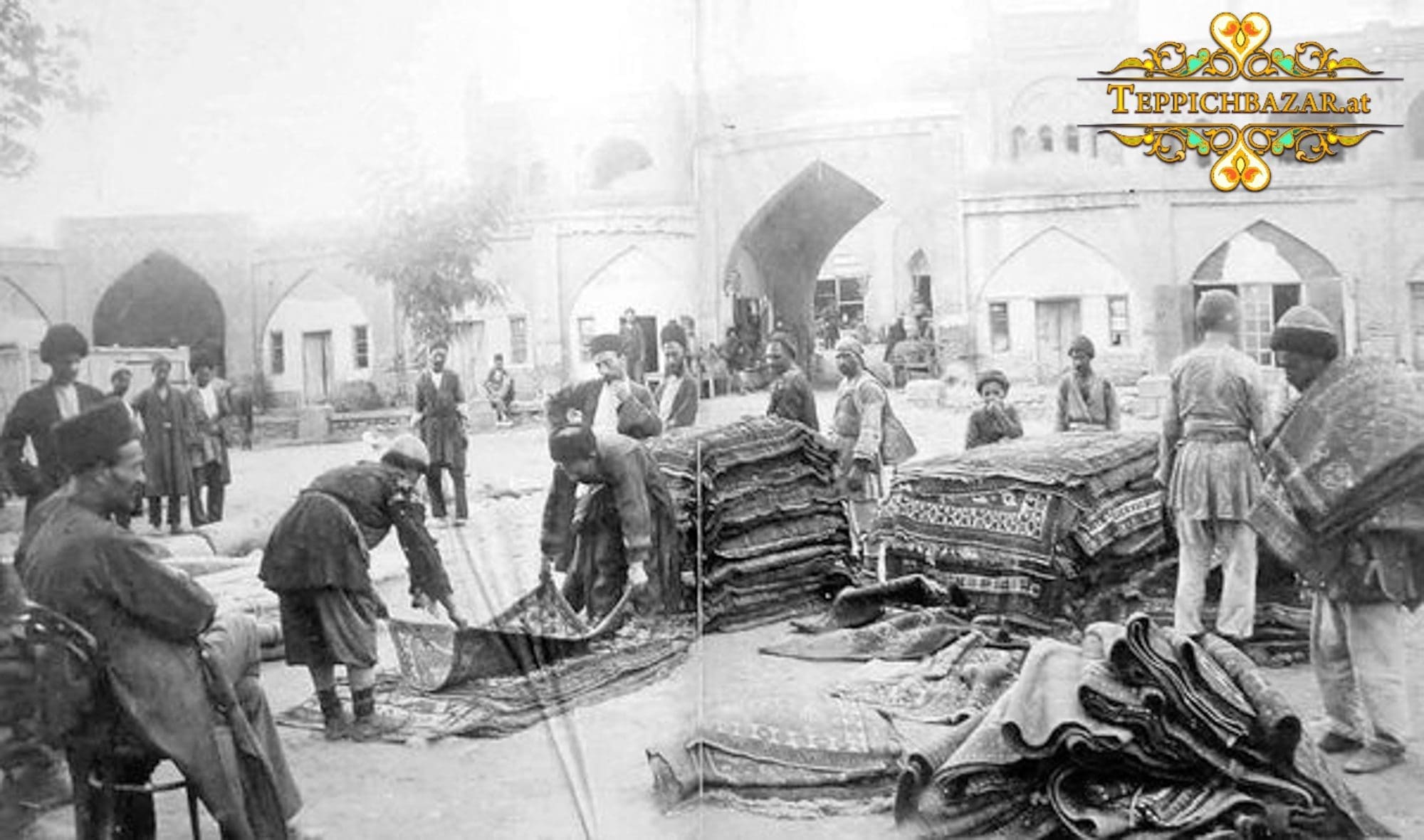 A Persian rug bazaar in the 19th century
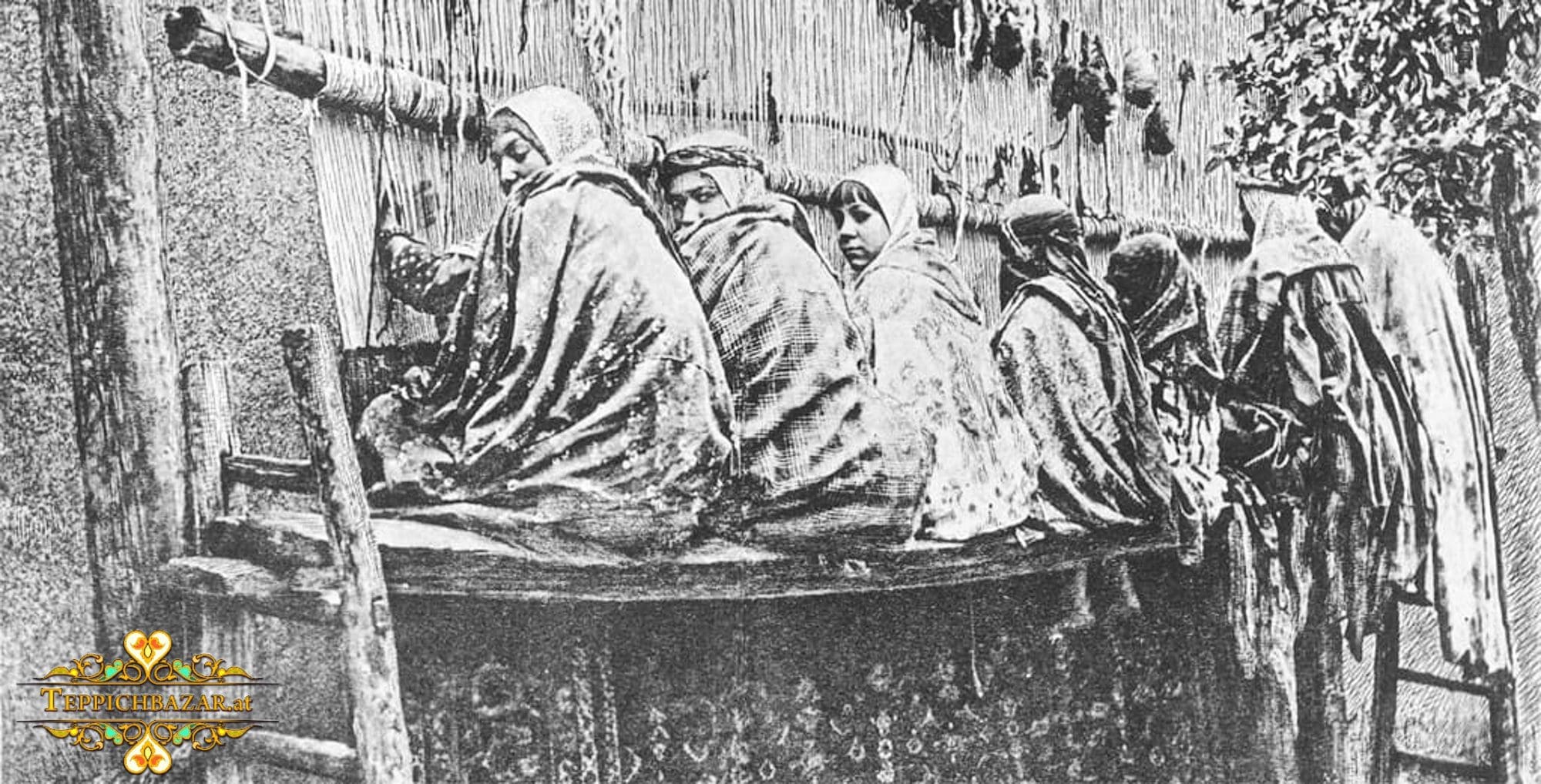 Women weaving in the Markazi region in the 19th century — men and women were both vital to the economy and family workshops
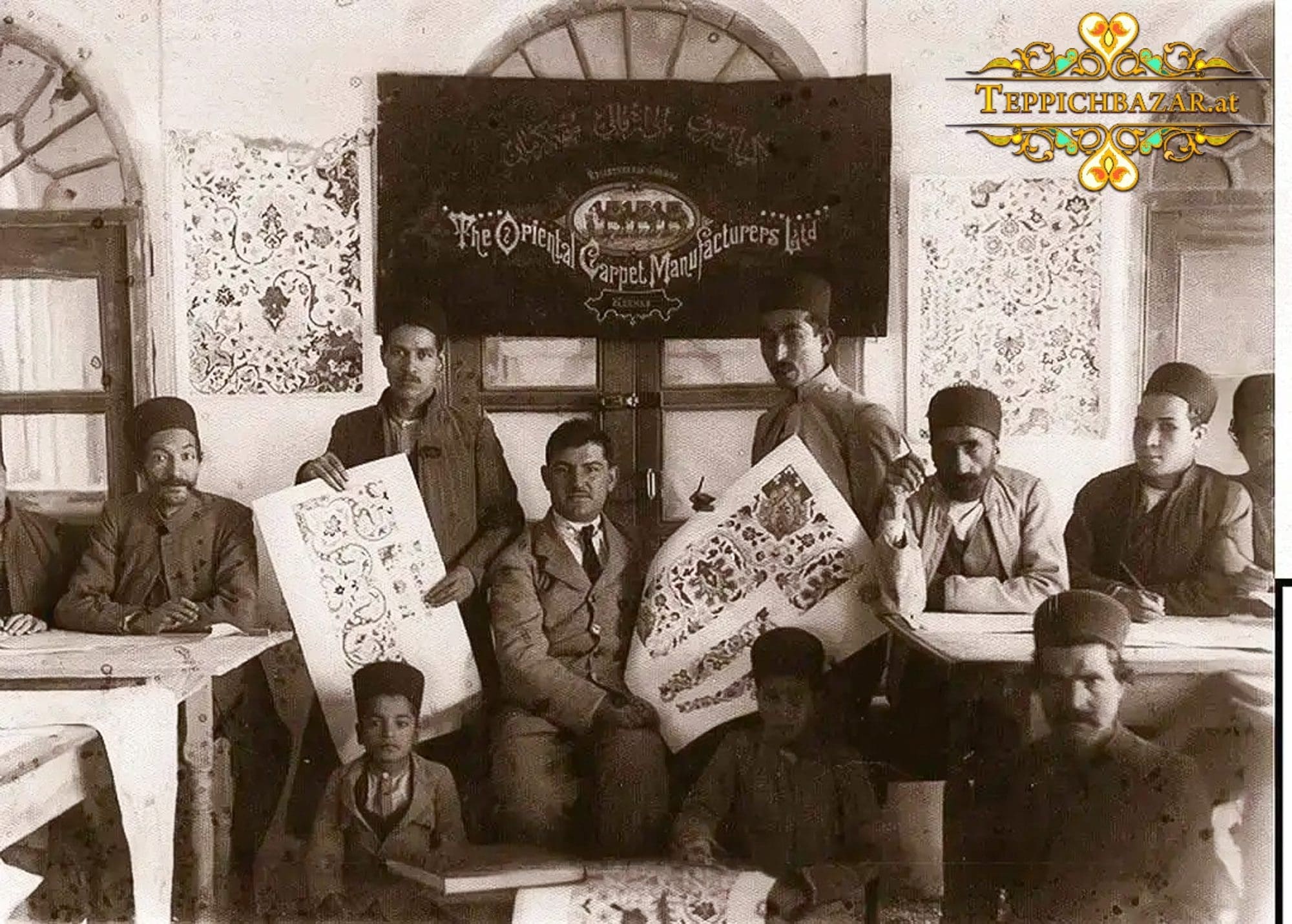 The Kerman provincial office for Oriental rugs
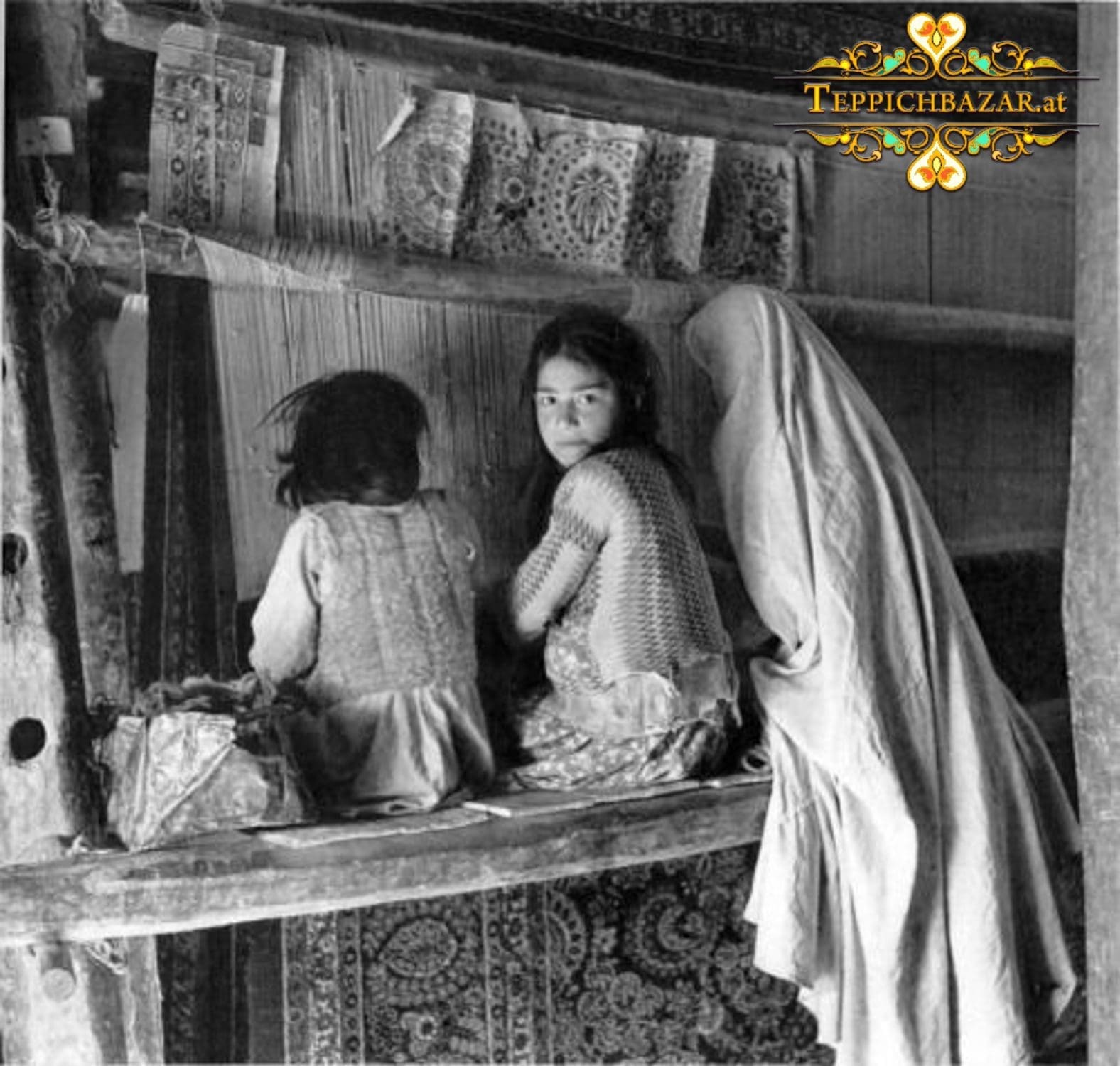 1920 — generations of child rug-makers who grew up knotting rugs their whole lives
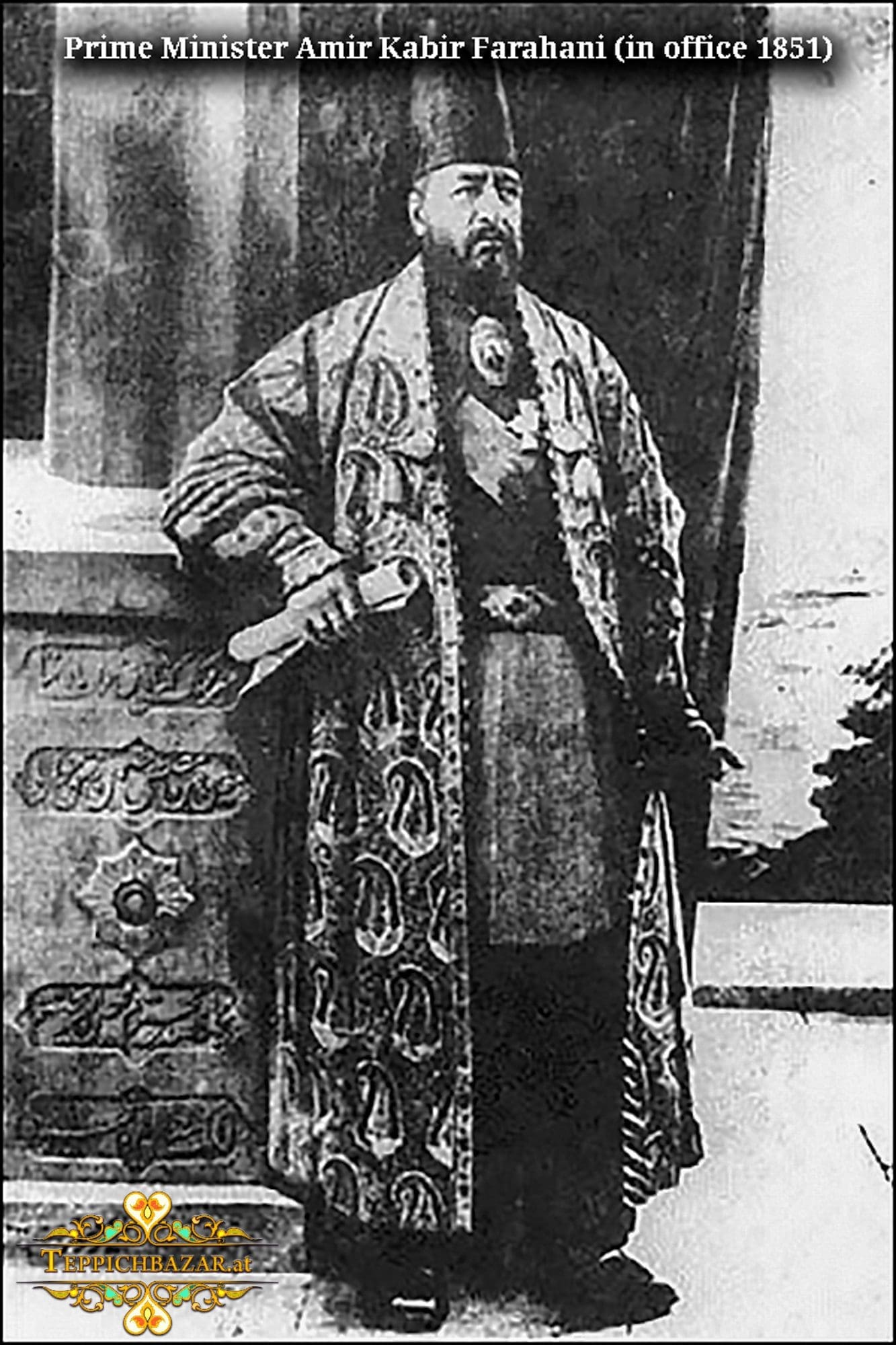 The Prime Minister from Farahan in the 19th-century Qajar dynasty, among the key statesmen who built the Persian Empire’s infrastructure
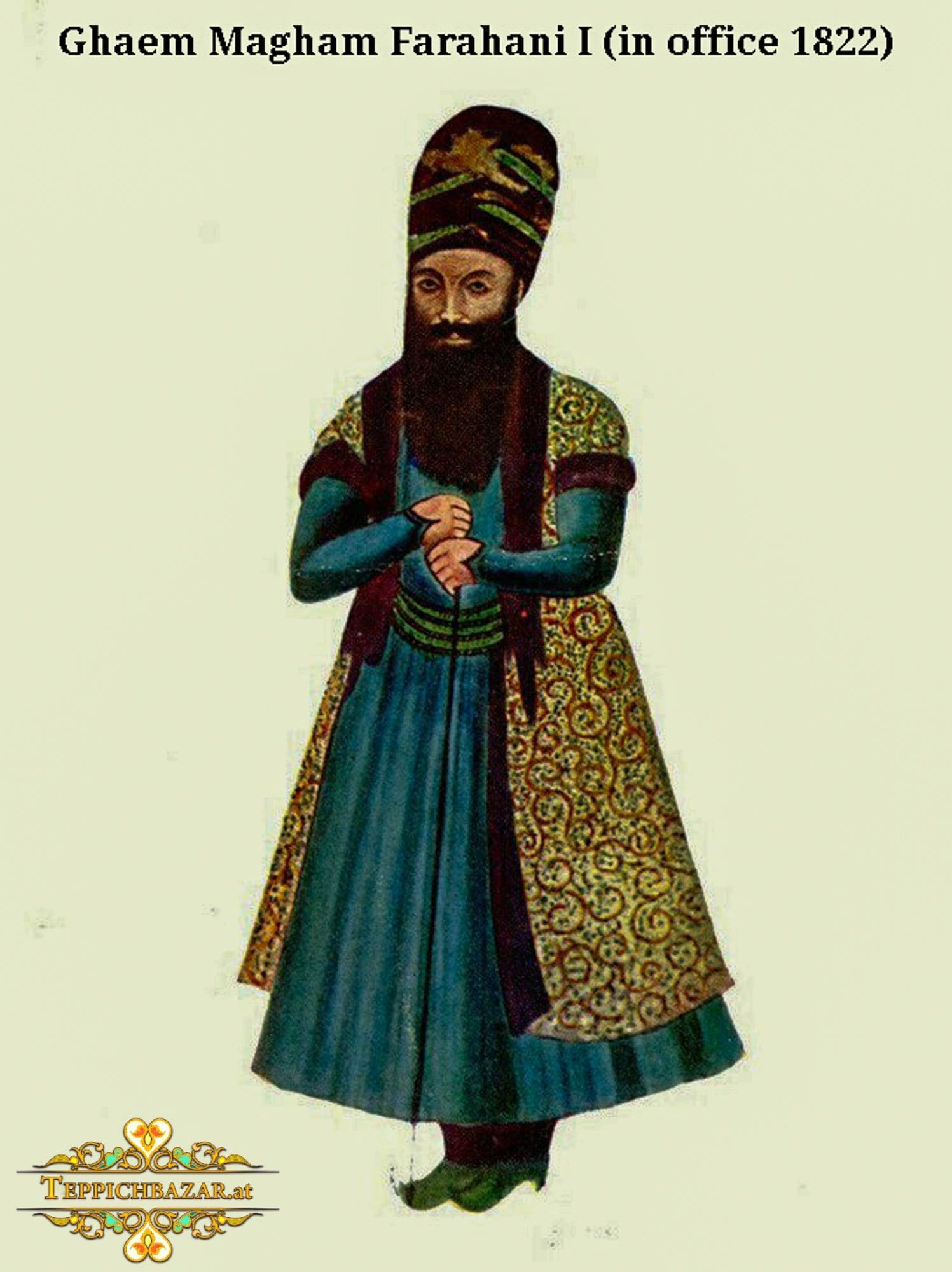 A 19th-century Qajar-era politician from Farahan who helped build trade and logistics infrastructure with Western countries
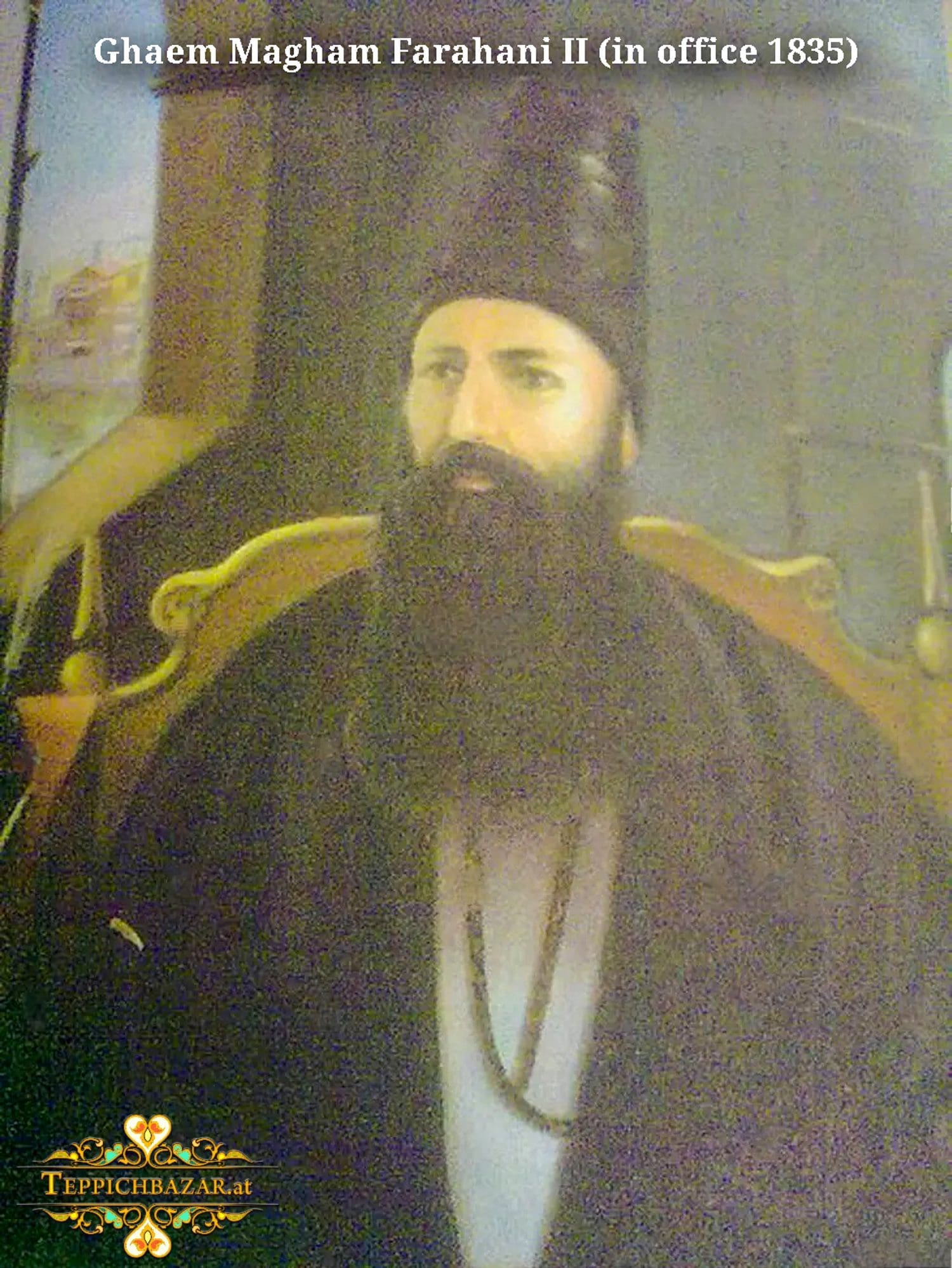 Ghaem Magham Farahani II
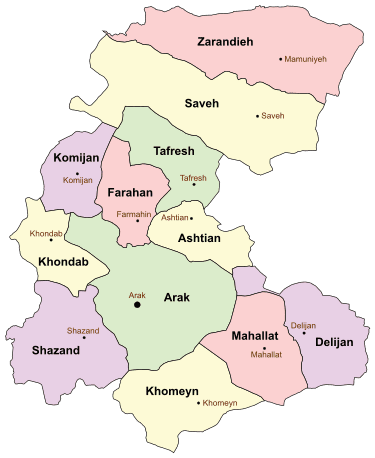 Central Persia (Markazi Province)
Handmade Persian Rugs
Oriental Heritage in the West
Ziegler & Co. in the 19th century played a central role in bringing Persian rugs from Central Persia (Markazi) — including Soltanabad (Arak), Sarough, Farahan, Malayer, Kerman, Tabriz, Hamadan, and Isfahan — to European markets. These rugs, documented in the Tehran Carpet Museum, were adapted to European market demands by the Swiss-British trading house under Franz Theodor Strauss.
It is believed that trade contacts and commissions in these weaving regions, particularly Farahan, were encouraged by three influential politicians and ministers of the Farahani family: Ghaem Magham Farahani I (in office until his death in 1822/23), Qa’em-Maqam Farahani II (minister until 1835), and Mirza Taghi Khan-e Farahani (Amir Kabir) (Prime Minister until 1851).
During his three journeys to Europe (1873, 1878, 1889), Naser al-Din Shah Qajar visited countries including Germany, Belgium, England, France, Switzerland, Italy, Austria, and the Ottoman Empire. He met figures such as Queen Victoria, Wilhelm I, Otto von Bismarck, Leopold II, Patrice de MacMahon, Vittorio Emanuele II, and Franz Joseph I.
A cultural highlight of the era was the Persian March by Johann Strauss II, performed in Vienna in 1873 in honor of the Shah.
These connections illustrate the key role played by Farahan and its celebrated statesmen in promoting Persian rug art and cultural exchange during the 19th century.
Note: Historical images referenced on the original site are generally in the public domain, as copyright expires 70 years after the creator’s death. Many works are over 100 years old or released under a Creative Commons license.